

How to spot a fake solar lead (and what 2FA really means)
Why fake solar leads happen
A lead is only as good as the number attached to it. Fakes and duds creep in a few ways:
- Typos and junk. A homeowner fat-fingers their number, or a bot fills the form. Nobody checks, and it lands in your CRM as a “lead”.
- Incentivised forms. Win-a-prize and free-gift funnels pull people who never wanted solar. The name is real, the intent is not.
- Aged and resold data. Marketplaces resell old leads that have already been called ten times. The person forgot they ever enquired.
You find out the expensive way: you dial, it rings out to a disconnected line, and you have paid for silence.
The one question that exposes a fake
You do not need to be a data expert to protect yourself. Ask any lead company one thing:
If the answer is yes, the number is a guess and fakes get through. If the answer is no, because the homeowner has to enter a code sent to their phone before the form will submit, then a fake number physically cannot become a lead. That single distinction separates real verification from decoration.
“SMS verified” vs 2FA: not the same thing
Most of the market says “SMS verified”. Ask when the SMS happens, because the timing is everything.
Verification after capture (weak)
The lead is captured first, then an SMS goes out. The fake number is already in the system and already sold to you. The text step is cosmetic. Fakes still get through.
Two-factor, before submission (strong)
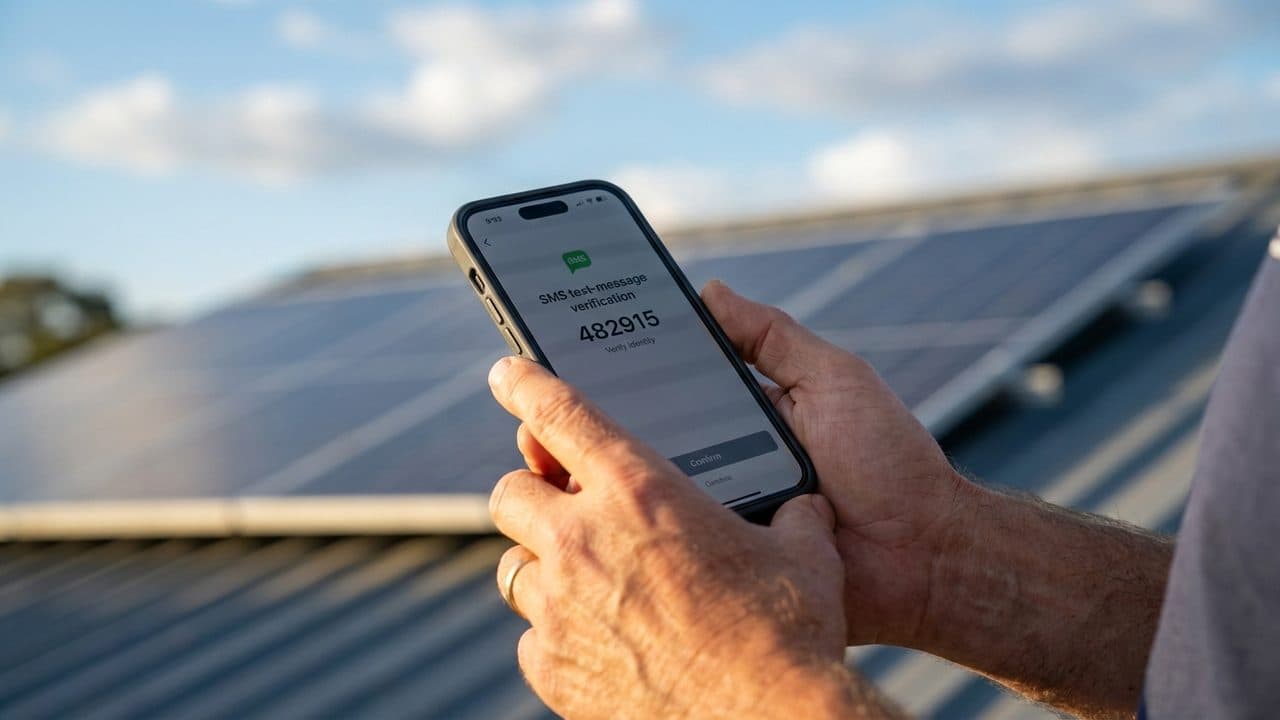
The homeowner gets a code and has to type it back in before the form will submit. No real mobile, no lead. This is what 2FA means, and it is the gate that lets us promise no fakes, ever.
The signs you are getting fakes
If you are already buying leads, watch for these. A high rate of any of them means weak verification:
- Numbers that ring out to disconnected lines.
- Names that do not match the person who answers.
- Renters and non-homeowners who cannot actually buy.
- People who do not remember enquiring at all.
- The same lead you swear you have called before.
None of that is your sales team's fault. It is a verification problem upstream.
What proper verification looks like
Strong verification stacks a few checks so only real buyers reach you:
- 2FA mobile. A code the homeowner enters before the form submits.
- Email confirmed. A second contact channel that has to be real.
- Ownership and intent. Homeowner, not renter. Bill size, roof type, postcode, and purchase timeframe captured across 8-plus steps.
- Prevention, not clean-up. The strongest providers stop fakes at the door with 2FA, so there are no duds to send back later.
Before you buy from anyone
Ask the one question. Ask when the SMS fires. Ask whether they prevent fakes or only replace them after the fact. If a provider dodges any of them, keep your money. For the full checklist and the field compared, read the buyer's guide to solar lead companies, and see why exclusive beats shared once the leads are real.
Frequently asked questions
How do I know if a solar lead is fake?
Ask the provider one question: can the form be submitted without confirming a real mobile number? If yes, the number is a guess and fakes get through. If the homeowner has to enter a two-factor SMS code before the form submits, a fake number physically cannot complete it.
What does 2FA verification mean for a solar lead?
Two-factor (2FA) verification means the homeowner receives a code on their mobile and must type it back in before the form will submit. A typo, a bot, or a fake number cannot get through. It is a stronger check than a number simply typed into a form.
Is SMS verified the same as 2FA?
Not always. Some providers send an SMS after the lead is already captured, which is decorative because the fake number is already in their system. True 2FA gates the form before submission, so only real, confirmed mobiles become leads.
What are the signs I am buying fake or bad leads?
Dead or disconnected numbers, names that do not match, renters and non-homeowners, people who do not remember enquiring, and numbers that never answer across repeated attempts. A high rate of these points to weak verification.
What should happen to fake solar leads?
Two models exist. Some providers replace bad leads after delivery. The stronger model is prevention: Capital Leads 2FA verifies every mobile before the form can submit, so fake and wrong numbers never become leads in the first place. Nothing to replace, because nothing fake gets through.
How does Capital Leads verify leads?
Every lead is 2FA mobile verified with a code the homeowner has to enter, email verified, and qualified across 8-plus steps before delivery. That is why we can say no fakes, ever.
Exclusive solar leads, 2FA verified. No fakes, ever.
Tell us your state, your postcodes, and how many jobs a week you want. We will show you live pricing and territory availability before you spend a cent.
Written by the Capital Leads team, who build exclusive lead flows for solar installers in every Australian state. Updated September 2026.